
According to Southern tradition, eating black-eyed peas on New Year’s Day will bring a year’s worth of good luck and/or monetary gain.
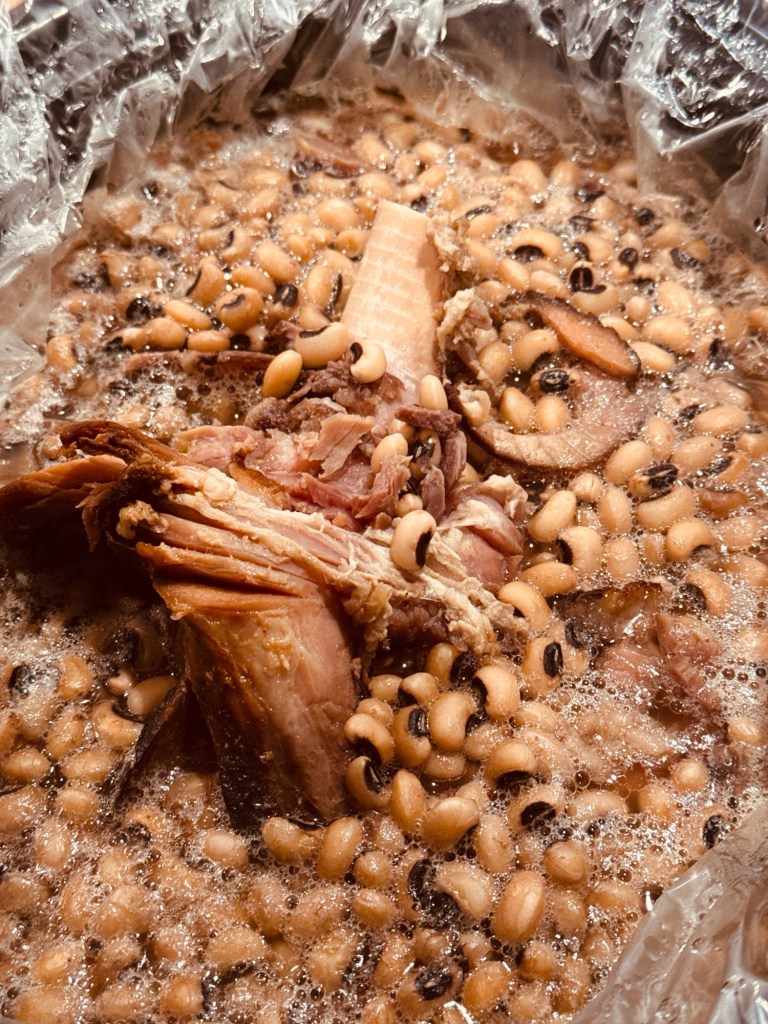
I’ve heard we are suppose to add collard greens also. Our peas have been in crock pot for hours since before day light hours. But, no Collard Greens with hot pepper vinegar! I just don’t know how to cook a pot of greens like my gifted Southern friends.
Happy New Year to all! 2024!
 thedailylily.com
Your black-eyed peas look good, Sara! Happy New Year to all as well!
They were great! Honey baked ham bone made them very tasty.
June, of NC sends you greetings and wishes for you a very happy New Year!
Thank you June! Greeting to you and Happy New Year as well!
Yum!! Those black eyed peas look delicious! Mine were too, but I did t have collard greens either. Happy New Year!🥳
Tammy, have you made a pot of winter collard greens? I visualize driving down Rt 32 in NC during cold weather seeing collar greens for sale. I was told they seem to be better once a frost hits them.
Have you experienced that? I love hearing about foods made by locals right from the fields and gardens.
My 3 year old granddaughter and I were talking during Christmas about planting a garden together with tomatoes and cucumbers and her eyes sparkled with delight.🥒🍎 Then she said, “Grandma, at my old house (which was Uk) we had big strawberries 🍓🍓🍓to pick. Can we plant some?”
I thought what a beautiful memory for her to take away from the beautiful fields of the UK! I have childhood memorirs from the grand fields of NC.
I often relate people and land to the Kingdom of God. We pray the Lord’s Prayer world wide for, “his Kindom to come to earth as is in heaven…”
Then my thoughts glean the beauty of God’s earth for us, children and grands as we teach, pray and grow while memories are being made.
One of my favorite scriptures for the New Year as we enjoy and search for Black-eyed peas blessings grown in fields to assist in overall good health…Plasm 24,”The earth is the Lord’s, and the fullness thereof; the world and they that dwell on it.” 🙏🏼
A little history of our pea from Wikipedia “The Black-eyed pea originates from West Africa and has been cultivated in China and India since prehistoric times.[6] It was grown[7] in Virginia since the 17th century by African slaves[8] who were brought to America along with the indigenous plants from their homelands.[9] The crop would also eventually [10] prove popular in Texas. The planting of crops of black-eyed peas was promoted by George Washington Carver because, as a legume, it adds nitrogen to the soil and has high nutritional value. Throughout the South, the black-eyed pea is still a widely used ingredient today[11] in soul food and cuisines of the Southern United States.[12] The black-eye pea is cultivated throughout the world.”