
“For you have the poor with you always, and whenever you wish you may do them good; but Me you do not have always.” — Mark 14:7 (NKJV)[
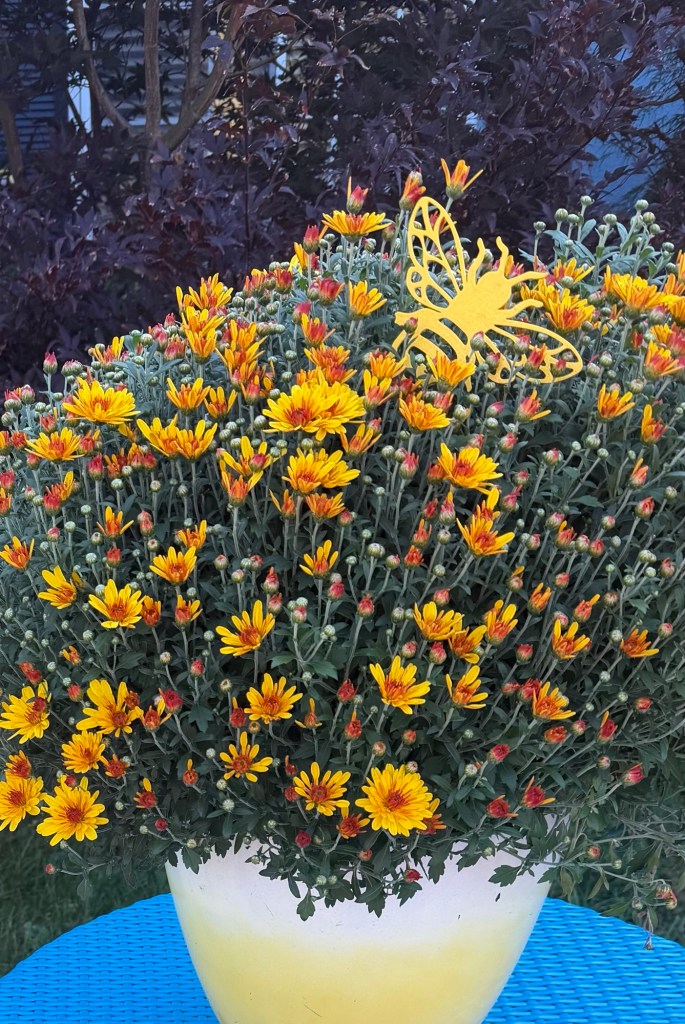
A reminder that growth is a process: open blooms, fresh buds, and a little reminder to go out and share the sweetness of Christ. (Photo by Sara 2026) (Chris made Bee-3-D)
Jesus was resting in Bethany at the home of Simon, a man who had once suffered from leprosy. As they sat together, a woman stepped into the room holding an expensive jar of sweet-smelling perfume. Without hesitation, she broke it open and poured it over Jesus’ head.
Instantly, the room filled with fragrance—and tension. Several guests grew furious. “Why such a waste?” they complained. “We could have sold this perfume for a fortune and given the money to the poor!” They began saying cruel things to her.
But Jesus quickly defended her: “Leave her alone! Why are you bothering her? She has done a beautiful thing for me… You will always have the poor with you, and whenever you want to, you can give to them. But you won’t always have me here with you.” (Mark 14:6-7, CEV)
I was sharing these verses recently with a deeply religious friend. He knows his Bible well, but he was facing a serious health crisis and preparing for major surgery the very next day. In that heavy state of mind, Jesus’ words caught him completely off guard.
“Whenever you want to,” he repeated,! “I’ve never noticed that phrasing in the Bible. What translation is that?”
That interaction reminded me that God is constantly calling us into seasons of change and spiritual growth. Sometimes, we think we have the Bible—and life—all figured out. But just like a pot of autumn mums, our old, dried-up thoughts have to move out of the way to let the new blooms open up.
Our minds are renewed exactly like that—in stages. God shakes up our old, comfortable patterns of thinking to make room for fresh, new growth. Jesus isn’t just the reason for the season; He is the catalyst for how we see things.
We looked it up, noting how Mark is the only Gospel writer to include that specific phrase (though Matthew 26 and John 12 tell the same overarching story). It got stuck in his mind, and honestly, it stayed stuck in mine, too.
The religious critics in that room saw the woman’s worship as a wasteful mathematical problem. They wanted to track the budget and argue about charity, but their hearts were completely blind to the Savior standing right in front of them. John’s Gospel even exposes that Judas didn’t actually care about the poor at all—he was just hiding behind a mask of religious duty.
When our perspective truly changes, generosity stops being a legalistic obligation or a political debate. It becomes an immediate, personal response to loving Jesus.
We stop worrying about what billionaires are doing with their wealth, and we start looking at what is in our own hands. Notice the little yellow bee stake sitting on top of those mums. A bee doesn’t just sit on a flower to look pretty; it visits the plant to gather pollen and carry life out into the wider world.
When God changes how we see things, we become like that bee. 🐝 Growth means walking over to a struggling neighbor with a carton of milk from our own fridge. It means snagging a pair of socks from the dollar store for a kid who needs them, or dropping off a can of soup at a local food box because we want to, and because our eyes have been opened to carry the sweetness of Christ into our communities.
Mark recorded the words of Jesus in a beautifully simple way so that the meaning couldn’t be missed. True maturity isn’t about changing the world’s systems overnight; it’s about letting the Holy Spirit renew our minds day by day (Romans 12:2). When we change how we see Jesus, it radically changes how we see, love, and serve the people around us.

