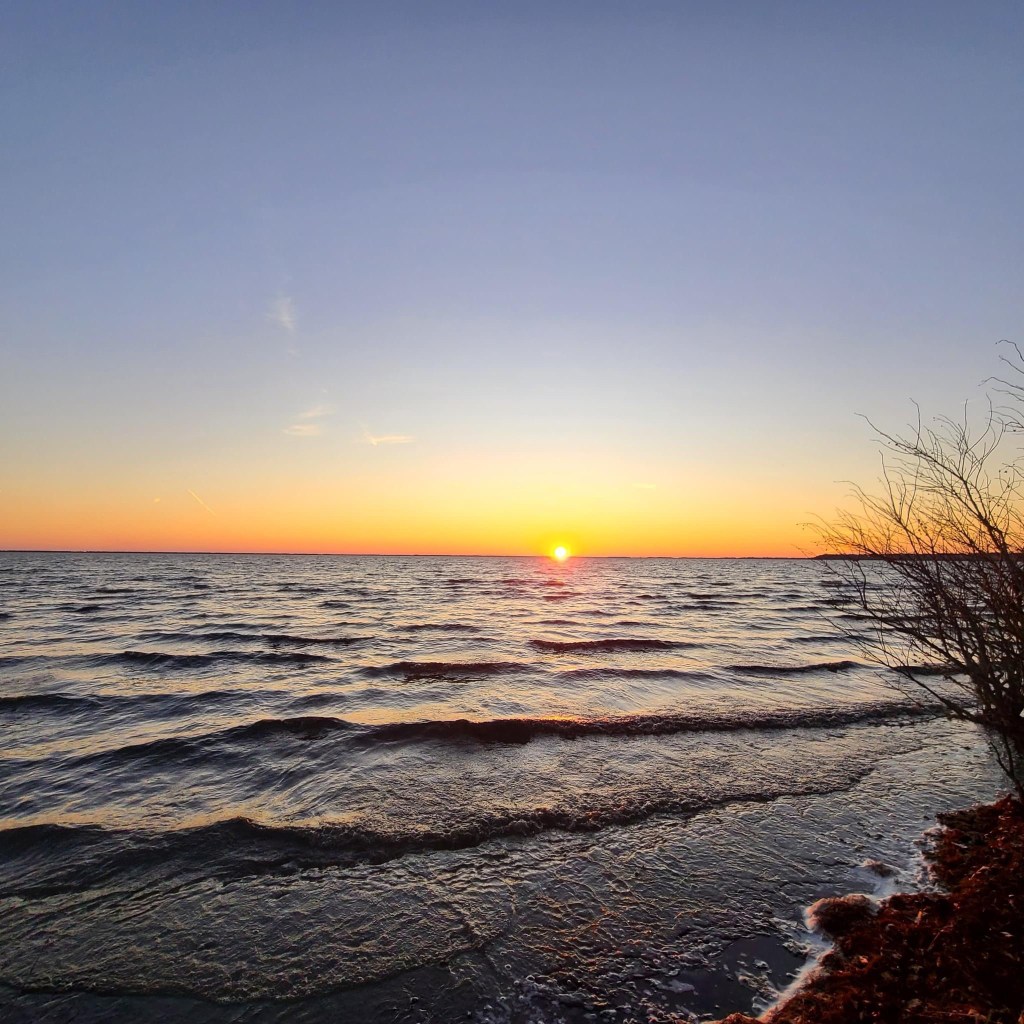
My earliest years of life being before age ten were lived in a woody swam farm area. My week-ends and summers were often spent on the sandy farm and fishing piers on the Albermarle sound with grandparents.
Often running barefoot to touch the lush meadows where livestock would graze and family would toil until the setting of the sun. Then the week-ends would come and often to visit the farm where I found sand grabbing my toes and fruit trees gifted me fruit while the sound gifted fish, shade and fun called swimming. Yet, it was floating on an old inter tube.
Living afar from area where being a child always seemed so exotic for many years has changed in people, land and culture. Yet, the thing I loved and adored the most remain dear and near in the heart.
Let everything that breathes sing praises to the LORD! Praise the LORD! (Psalms 150:6)

The native plants still seem to reveal the life and faith and love of their native land. Let’s sit and chat and tell our stories of living on the land.
Eastern North Carolina has a diverse range of plant species that are native to the region. Here are some examples:
- Bald cypress (Taxodium distichum): This is a large, long-lived deciduous tree that is common in wetland areas, particularly in the swamps and bottomlands of the coastal plain.
- Carolina laurelcherry (Prunus caroliniana): This evergreen shrub or small tree is found in a range of habitats, including sandy soils, pinelands, and coastal hammocks.
- American beautyberry (Callicarpa americana): This deciduous shrub is known for its clusters of bright purple berries that appear in the fall. It is often found in woodland edges and along streams.
- Yellow pitcherplant (Sarracenia flava): This carnivorous plant has distinctive yellow pitcher-shaped leaves that trap and digest insects. It grows in wetland habitats like bogs and savannas.
- Red bay (Persea borbonia): This evergreen tree is common in coastal plain forests and is related to the avocado. It has glossy leaves and small, purplish-black fruit.
- Longleaf pine (Pinus palustris): This iconic southern pine is known for its long needles and large cones. It is an important component of the region’s longleaf pine forests.
- Wild azalea (Rhododendron canescens): This deciduous shrub produces showy pink or white flowers in the spring and is found in wooded areas and along streams.
- Swamp milkweed (Asclepias incarnata): This perennial plant has pink or purple flowers that attract butterflies and is found in wetland habitats like swamps and marshes.
- Eastern red cedar (Juniperus virginiana): This evergreen tree is a common component of the region’s woodlands and is known for its aromatic, red-hued wood.
- Swamp dogwood (Cornus foemina): This shrub or small tree is found in wetland habitats like swamps and floodplains and produces clusters of white flowers in the spring.